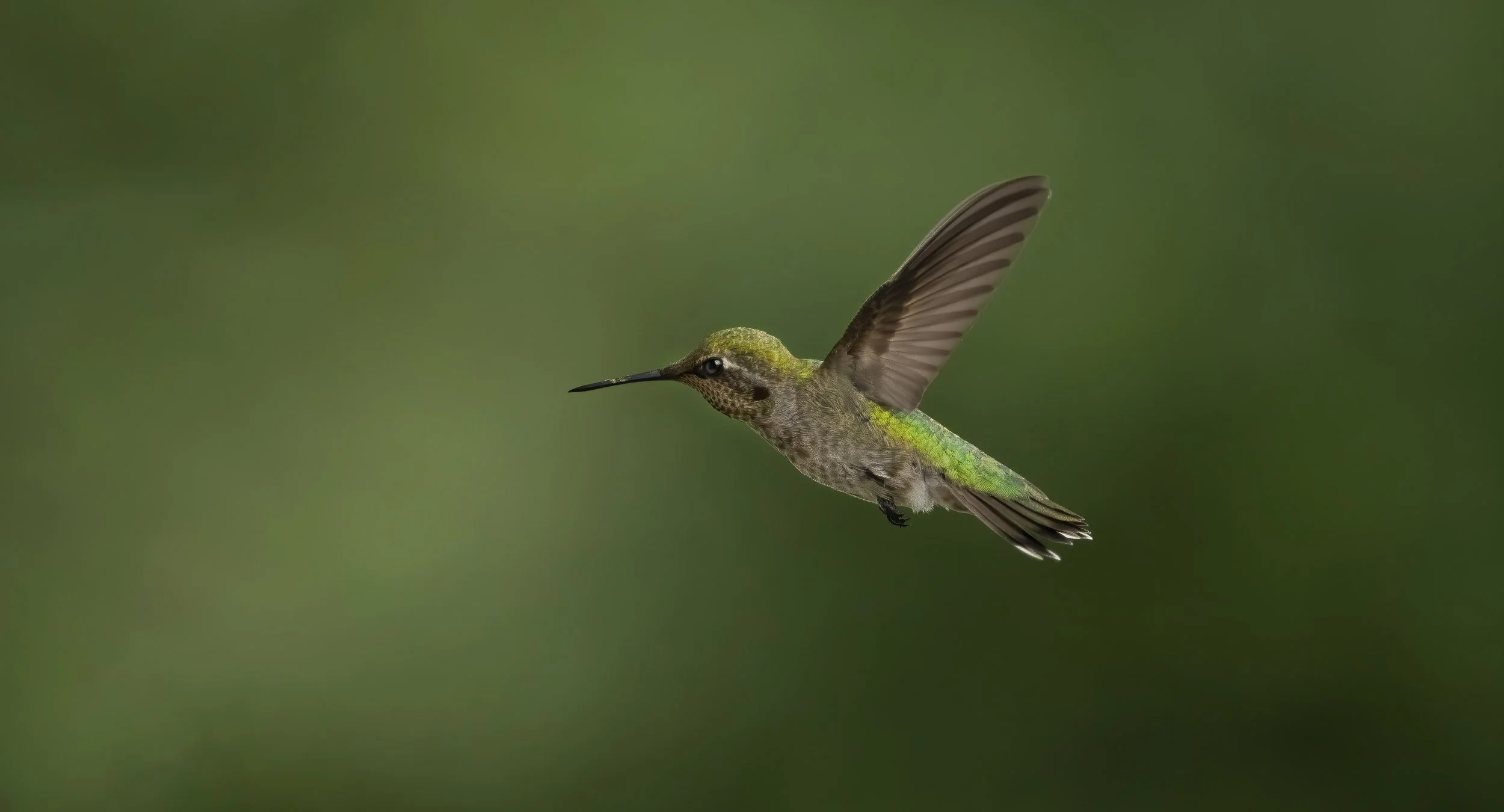
The Hummingbird Experience
Join Terry VanderHeiden for a week with Hummingbirds. The workshop is from Monday May 24 - May 27 - 2027 in Arizona.
About this workshop
This workshop is all about learning to photograph hummingbirds in Southern Arizona side-by-side with professional photographers. The photography is hands-on with a limited group size to allow the experts to be accessible.
About the Location
Santa Rita Lodge, Madera Canyon, Arizona
Madera Canyon is one of the most productive hummingbird locations in the United States, and Santa Rita Lodge sits right in the middle of it. Up to 15 species pass through the canyon's feeders and riparian oak-juniper woodland over the course of a year — more variety in one place than almost anywhere else north of the border. That density is exactly what makes this workshop possible: instead of chasing birds across a landscape, we let the landscape bring the birds to us.
Why This Location
Three things make Santa Rita Lodge the right setting for a hands-on hummingbird photography workshop: consistent subjects, zero travel time, and a small enough group that everyone actually gets coached.
Species Diversity
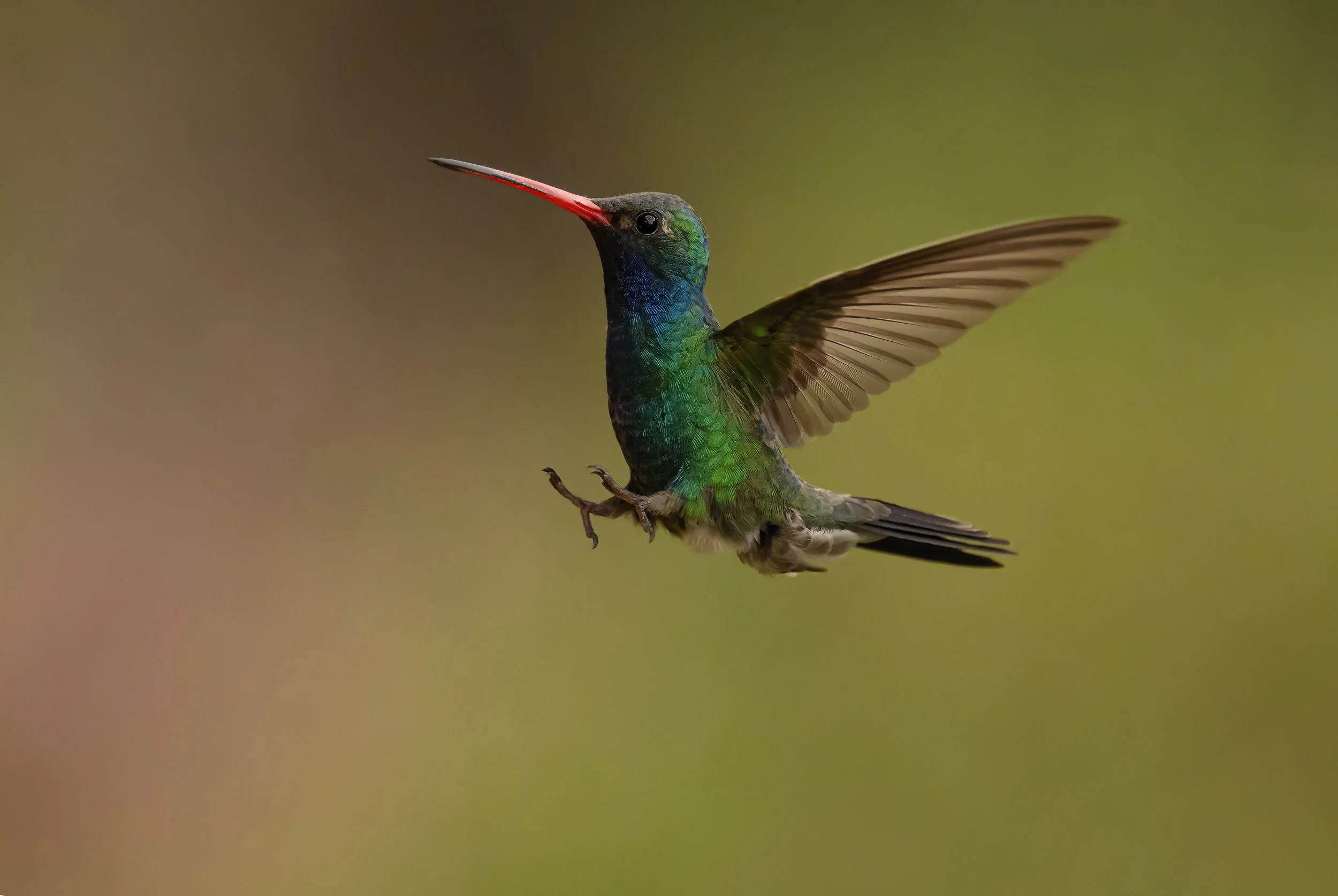
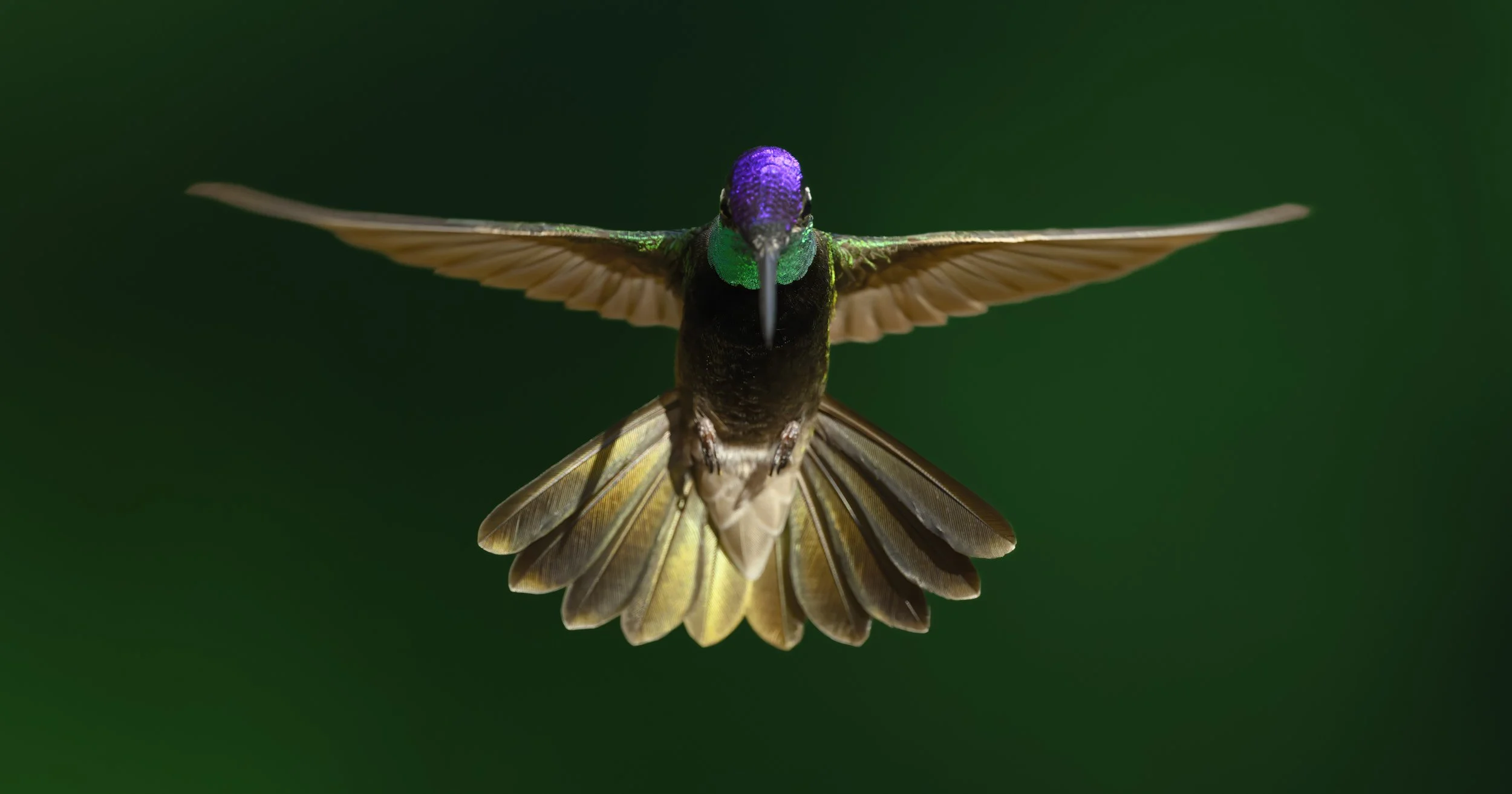
At roughly 5,000 feet elevation, the lodge's feeders regularly draw Broad-billed, Anna's, Black-chinned, Rufous, Broad-tailed, and Magnificent hummingbirds, with less frequent visits from Violet-crowned, Blue-throated, Calliope, and even the rare Plain-capped Starthroat. You're not photographing one species all week — you're building a portfolio across many, each with different colors, flight patterns, and light behavior to work with.
No Driving, No Hiking
Every shooting session happens a few steps from where you're staying. There's no early-morning drive to a trailhead, no gear to hike, and no lost light while everyone piles into vehicles. You wake up, walk outside, and start shooting. That extra hour of sleep and the reduced friction between “want to shoot” and “shooting” adds up across a multi-day workshop — more usable light, less fatigue, more frames.
Small-Group Format
This workshop is capped at 8 participants. At that size, we can work with you individually on camera settings, framing, and flash technique rather than lecturing to a crowd and hoping it sticks. If you get stuck mid-session, we will be close enough to walk over and fix it in real time.
The Setting
The canyon's riparian corridor — shaded by oak and juniper, fed by a year-round creek — is what concentrates so many species around the lodge's feeder stations in the first place. It's also simply a pleasant place to spend several days: cooler than the surrounding desert, quiet, and easy on the legs. Standing and light walking is all the location asks of you; there's no strenuous terrain involved in the shooting itself.
What This Means for You
● More time behind the camera, less time in transit
● A wider range of species to photograph and edit than a single-location shoot typically offers
● Individual instruction, not group lecture — capped at 8 participants
● A comfortable base camp: shoot, review images, rest, repeat, all in one place
What You Will Learn
Camera Fundamentals for Hummingbirds
Understanding hummingbird behavior and how to use it to your advantage. The proper camera settings for sharp images — what shutter speed to use, and the best aperture and ISO choices for these fast, tiny subjects.
Lighting Techniques
How to use natural light reflectors to shape and soften available light. How to use electronic flash to stop those tiny wing beats completely — and, just as importantly, how to use flash to show the wings in motion when that's the look you want. How to work with multiple flash units to gain complete control over the lighting in your images.
Building the Scene
How to use artificial backgrounds and flowers to enhance your compositions and create images that stand apart from a typical feeder shot.
Composition
Key rules of composition and how to apply them to hummingbird photography — the kind of framing and design choices that take your images from a good record shot to a stunning one.
Post-Processing
The post-processing techniques of Adobe Lightroom Classic and Adobe Photoshop, focused on improving color, tone, and sharpness so your final images match the quality of what you captured in the field.
Other subjects to photograph
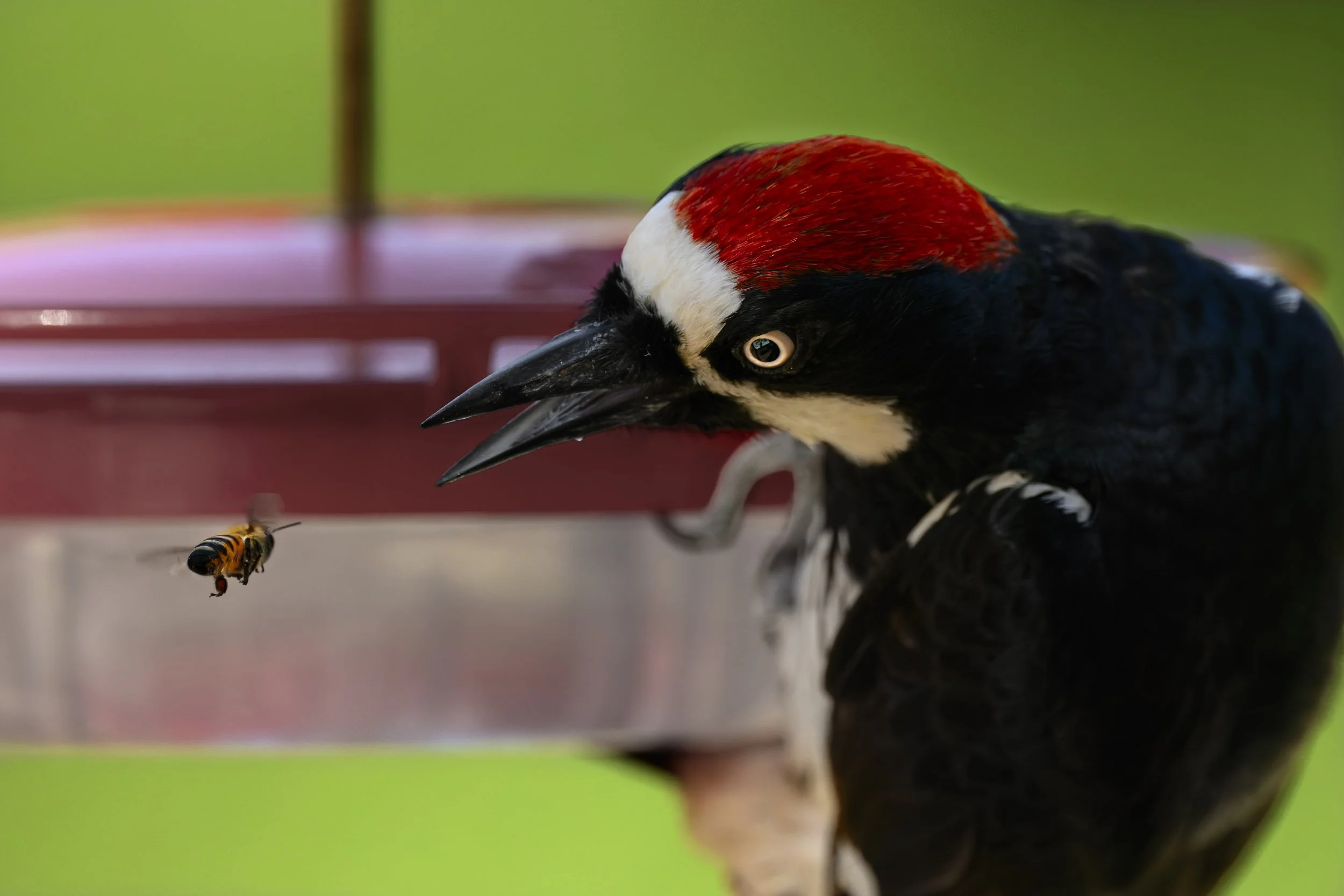
While we will be at this location primarily for the hummingbirds, there are many other species of birds and mammals that might be seen and possibly photographed:
· Acorn Woodpecker
· Arizona Woodpecker
· Bell's vireo
· Black hawk
· Black-headed grosbeak
· Bridled Titmouse
· Elf Owl
· Gambel's Quail
· Gould's Turkey
· Mexican Jay
· Mexican whip-poor-will
· Painted redstart
· Pygmy owl
· Sulfur-bellied flycatchers
· Summer and hepatic tanagers
· Whiskered screech owl
· Zone-tailed hawk
Mammals often sighted here:
· Arizona Gray squirrel
· Black bear
· Coatimundi
· Whitetail deer
· Raccoon
· Rock squirrel
Workshop Schedule
Day 1
3:30 pm to Sunset
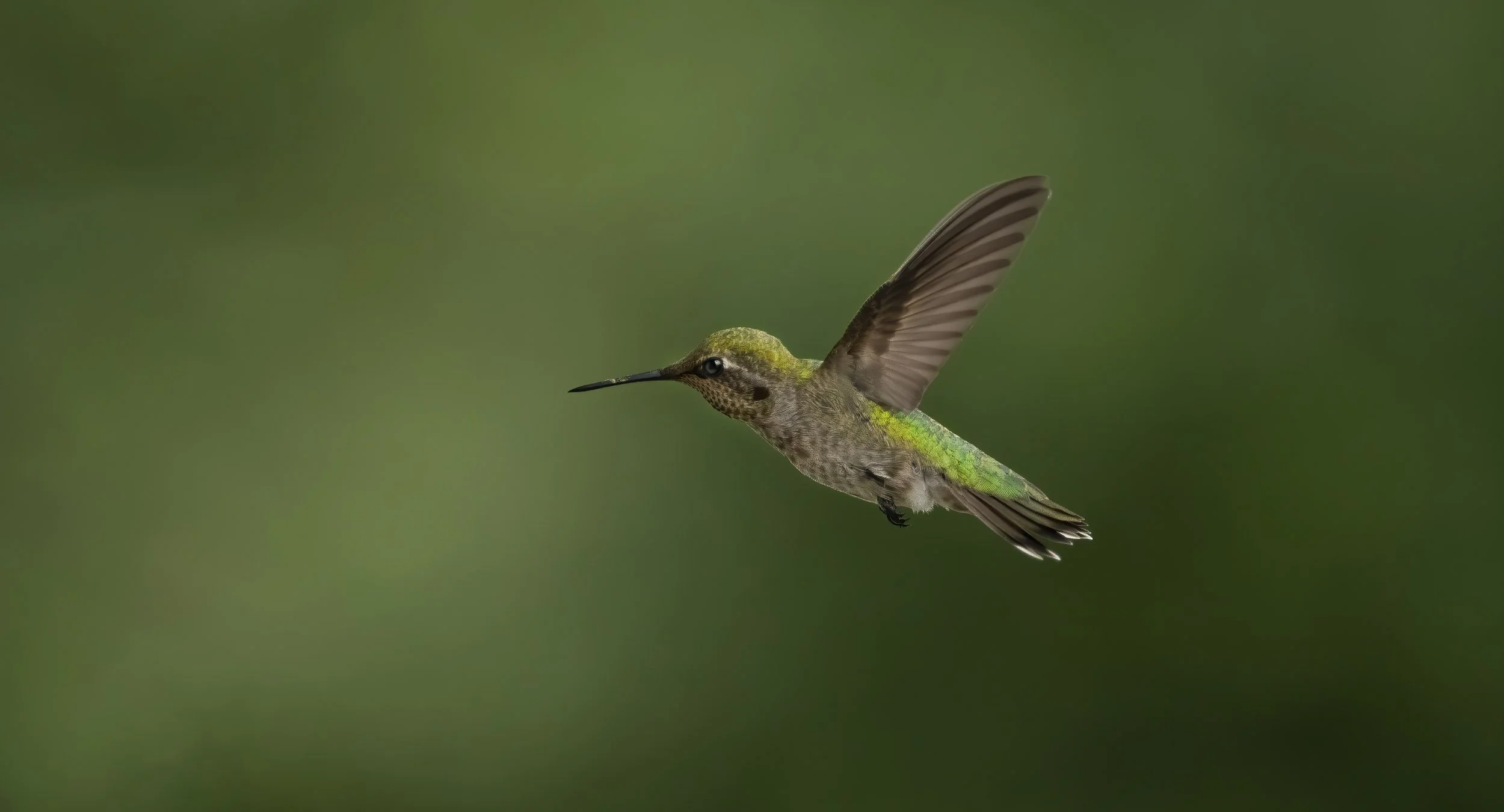
We will jump right into hummingbird photography as we start our first session. We will begin with introductions and workshop housekeeping, then get our equipment ready to shoot. We will go over simple settings and a little about hummingbird behavior. Stations will be set up (one photographer per station), and we will be on our way shooting hummingbirds as the light allows.
Day 2
6:30 am to 11:00 am
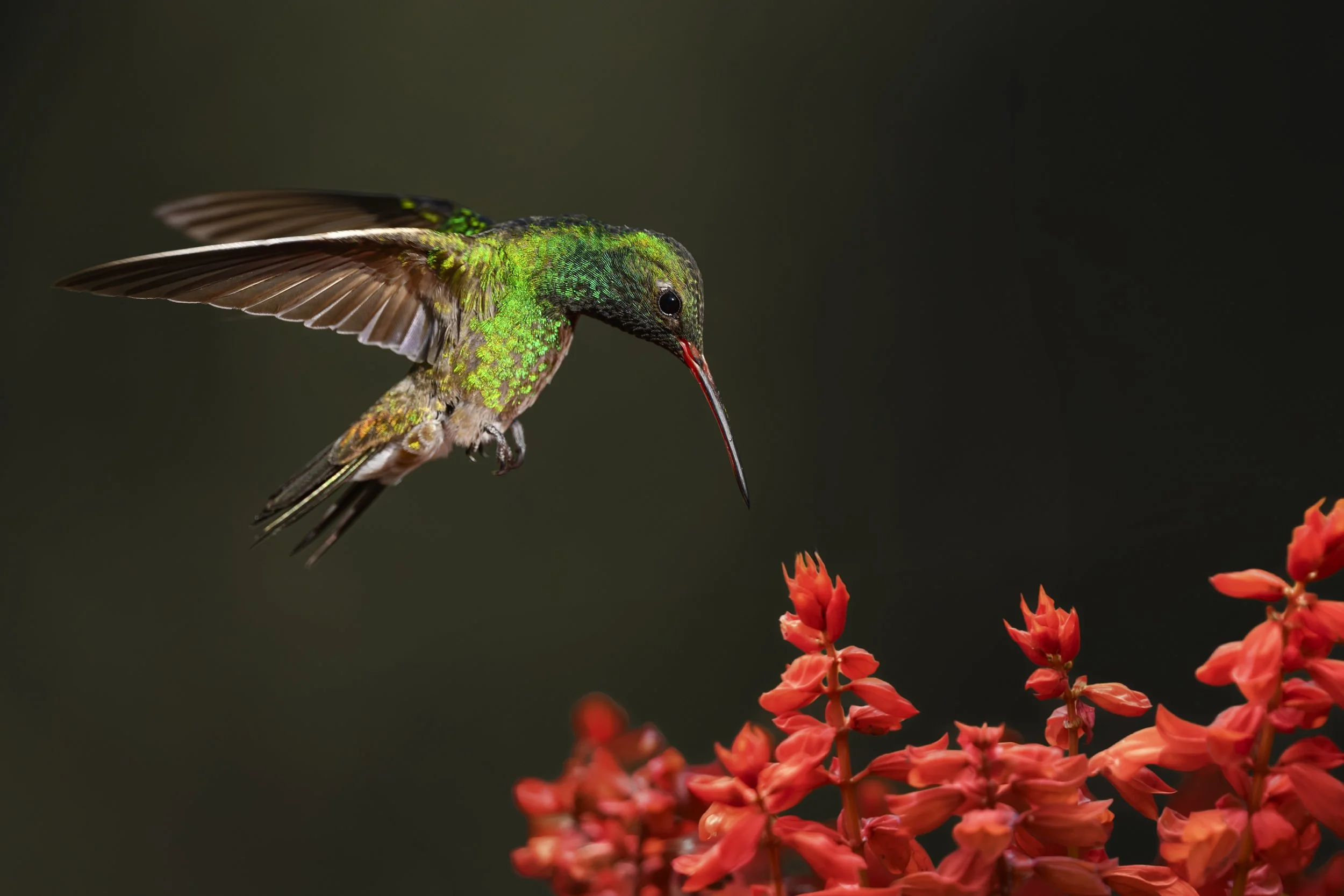
The early morning is one of the best times to get glass on these hummingbirds. We are in a canyon, so the light will rise over the hilltops to illuminate the birds. The hummingbirds are usually very active, so we should have plenty of subjects to capture. This morning we will have an introduction to flash photography. We will learn how to make captures where we can freeze the wings and use background elements to improve our images.
11:00 am to 2:30 pm
During the mid-day light, the birds aren't nearly as active, so we'll take this time to break for lunch and rest up for the evening shoot. Instructors will be on site to answer questions if you'd like to keep shooting. You'll also have time to head into town for a meal or back to your cabin to download images. There is also an area where other birds visit the feeders — a good time to work on your skills just a short walk from your cabin.
3:30 pm to Sunset
Using the skills we've already learned, we will continue our instruction on using flash to capture these entertaining subjects. We will rotate stations to make sure everyone gets to use all the different setups.
Day 3
6:30 am to 11:00 am
Today we'll take our skills to a new level. Flash photography is a fun activity for photographing hummingbirds, and now we'll advance to combining available light and flash — the best of both worlds. We'll use natural light to get realistic results, but this time we'll add flash to augment the light and bring out the color of the birds — not to stop the wings, but to add a burst of color to the hummingbird's feathers. These are the ultimate shots.
11:00 am to 1:30 pm
We'll take a shortened break for lunch. Take a walk on the nearby trails on your own and rest up for the next part of the day.
1:30 pm to 3:00 pm
We will gather as a group to work on post-processing of our images, covering Lightroom Classic as well as a bit of Photoshop and other programs to get the most out of the images we're creating. This is an opportunity to submit raw images for Terry to work on at this event.
3:30 pm to Sunset
During this session, we will work on all aspects of hummingbird photography using available light, bounce light, full flash setups, and available light combined with electronic flash.
Day 4
6:30 am to 10:00 am
This will be our final session, working with all the different lighting setups to really refine our skills at hummingbird photography. By now you will have gained experience photographing with available light and electronic flash, both as a primary light source and as a color enhancer for your hummingbird images. The goal is for you to take home these skills to use in future photography sessions with hummingbirds and other subjects.
The workshop is over at 10:00 am sharp. You must check out of your rooms by 11:00 am.
Ongoing Learning
You will have exclusive access to online tutorials on post-processing your hummingbird images, available later, after you return from the workshop.
Packages
Private Room (1 Registrant)
This option reserves a private room with a queen or king bed for one workshop registrant. You're welcome to bring a non-participating guest (spouse, friend, etc.) at no additional cost.
Prefer to room with another registrant instead? Choose the shared room option and register both guests under that listing.
Please note: non-participating guests won't have access to our equipment, shooting stations, or processing seminars but they're more than welcome to join us for any social events.
Price: $4,595 (per attendee)
Deposit: $1,000
Shared Room (2 Workshop Registrants)
This option lets you and a spouse or friend register together and share one room with two beds — both of you attending the workshop at a discounted rate.
How it works: As the buyer, you'll register both participants and pay the initial deposit for both workshop fees upfront. Your co-registrant can reimburse you directly, or use the "Contribution" payment option in our registration system to pay their portion later.
You'll sign a waiver at the end of your registration. Your co-registrant will receive their own waiver by email to sign separately — so be sure to provide their accurate email address when registering.
Price: $4,190 (per attendee)
Deposit: $1,000 (per person)
Physical Fitness Level
This workshop is appropriate for participants in good general health who can take part in half- and full-day events.
Getting to the Shooting Site
You'll transport your own gear from your cabin to the shooting site — a short, easy walk. Expect some gentle inclines and declines on both paved and unpaved surfaces, lasting 5 to 15 minutes at a stretch.
During Shooting Sessions
Sessions involve standing or sitting for extended periods, up to three hours at a time. Chairs are provided for anyone who needs to sit.
Elevation and Climate
The workshop takes place at approximately 5,000 feet elevation. Temperatures typically range from 60 to 90 degrees.
Gear and Luggage
You'll need to be able to transport your own gear and luggage to and from your cabin, and to and from your vehicle.
What’s included?
Three Nights of Comfort
Enjoy three nights' lodging at the Santa Rita Lodge — your home base for an unforgettable photography adventure.
Pre-Workshop One-On-One Zoom Meeting
Each participant will get a One-On-One zoom meeting with Terry VanderHeiden to go over equipment and techniques in advance of the workshop.
Two Expert Instructors, All Yours
You'll have the undivided attention of two dedicated instructors, committed to helping you grow as a photographer every step of the way.
Specialty Equipment Included — No Extra Gear Needed
Skip the shopping list! We provide all the flashes and specialty equipment you need to master jaw-dropping hummingbird photography.
Instruction That Doesn't Stop
Access to exclusive how-to videos for post processing your images when you return.
What's Not Included
Getting There
Transportation isn't included, so plan on a rental car or personal vehicle — there's no shuttle service to and from the lodge.
Fuel for Your Adventure
Meals aren't provided due to Arizona regulations and local logistics, but you won't likely go hungry — every room features a fully equipped kitchenette with a refrigerator, stove, microwave, toaster, and coffee maker, so you can cook up your own fuel between shoots.